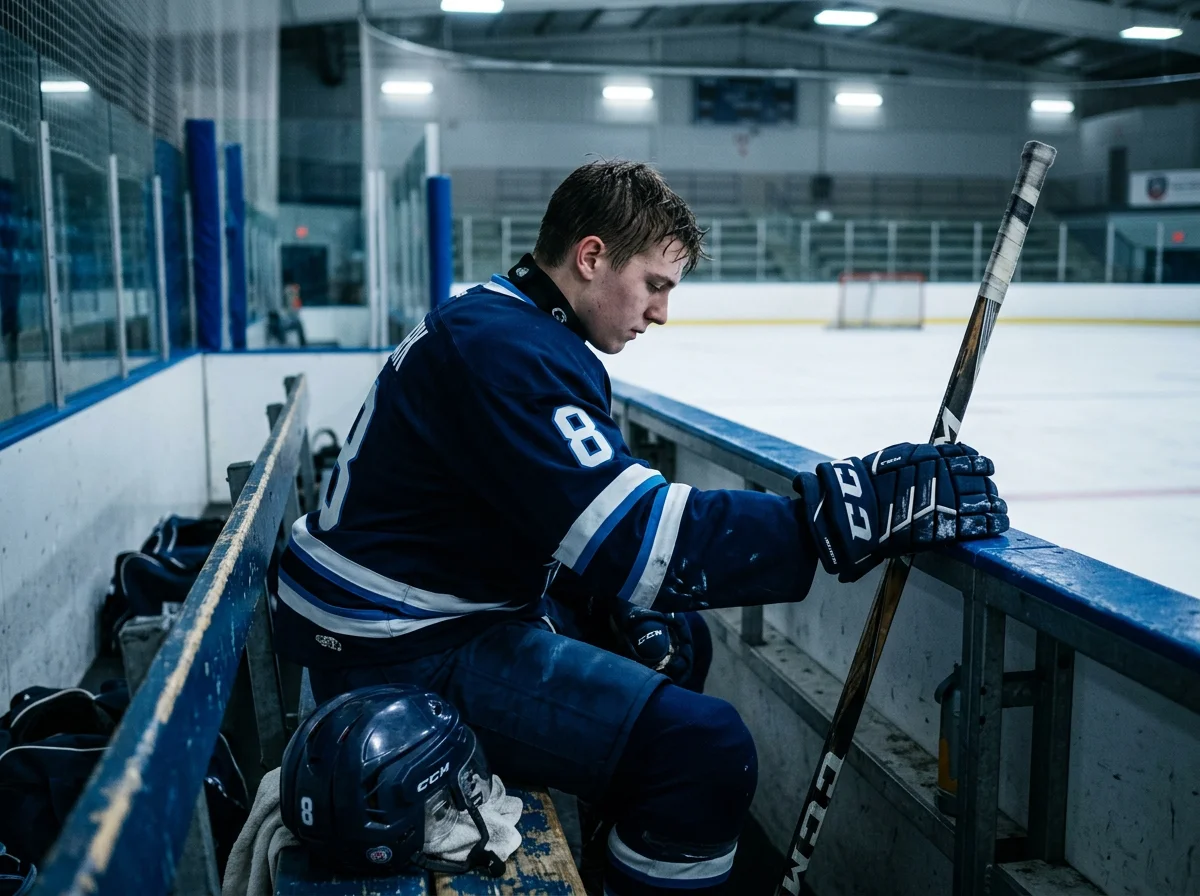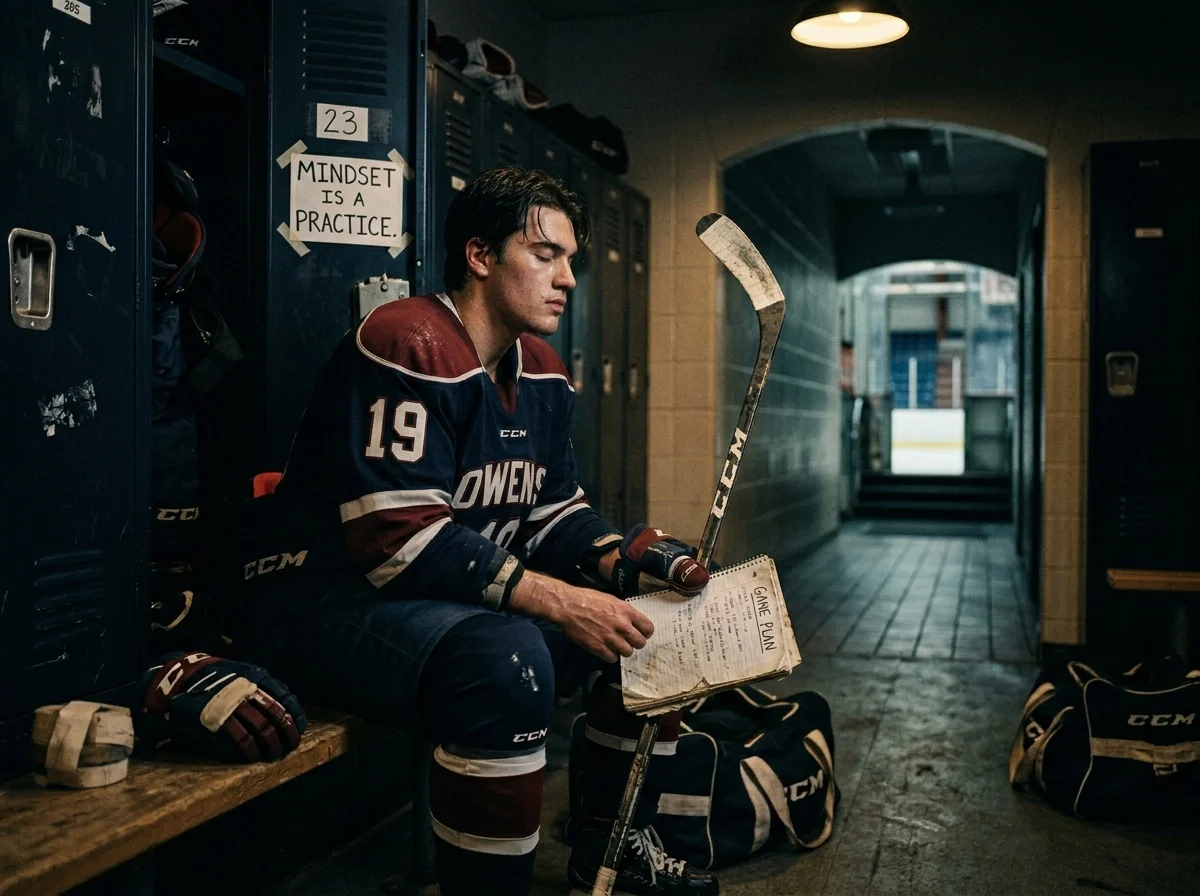

We spend months preparing the body and developing hockey skills. But what about preparing the mind?
By Walter Aguilar | Mindset Coach
The skates are sharpened. The equipment is ready. Summer training is wrapping up. Tryouts and training camps are getting closer.
But there is one piece of preparation that can easily get overlooked.
Mindset.
Over the years, I have worked with players and goalies who had tremendous physical ability but
struggled to access that ability when the pressure increased.
I have also watched players who may not have been the most talented on their team continue to grow,
earn opportunities, become leaders, and perform when it mattered most.
The difference was not always their skating, shooting, positioning, or technique.
Sometimes, the difference was what was happening between their ears.
The season will test their skills. It will also test their mindset.
CONFIDENCE IS BUILT BEFORE THE GAME
Every player and goalie wants to feel confident.
But confidence cannot be something they simply hope shows up on game day.
Real confidence has a foundation.
Preparation.
Instead of:
“I hope I play well tonight.”
I want players and goalies developing the mindset of:
“I have prepared myself. I trust my preparation. Now I am going to compete.”
When confidence becomes connected to preparation, effort, habits, routines, and attitude, it becomes much more stable.
MISTAKES ARE COMING
Let’s face it.
Your player is going to turn the puck over.
Your goalie is going to allow goals.There will be missed opportunities, difficult games, questionable calls, less ice time, changing roles,tough coaching decisions, and moments when things simply do not go their way.
That is hockey.
The goal is not to eliminate adversity.
The goal is to prepare your player or goalie to respond to it.
One of the most important things I teach is:
A mistake is something that happened. It is not who you are.
Instead of asking:
“What is wrong with me?”
We want them learning to ask:
“What can I learn from this?”
That shift moves them away from judgment and toward awareness, learning, and growth.
CONTROL THE CONTROLLABLES
Players can spend enormous amounts of mental energy worrying about things they cannot completely control.
Ice time.
Line combinations.
Who starts.
What the coach thinks.
Whether they make the team.
Where they are on the depth chart.
The more energy they give away to those things, the less they have available for what they can control.
THE CONTROLLABLES
Effort
Attitude
Preparation
Focus
Body language
Coachability
Response to adversity
The next shift
The next shot
Helping a young player understand this can be a game changer.
PARENTS, YOU ARE PART OF THE MINDSET TEAM
Parents have tremendous influence on the mental environment surrounding their player or goalie.
One of my favourite questions to ask young players is:
“What does the car ride home feel like after a game?”
Their answers can tell us a lot.
What gets discussed first?
The score?
Ice time?
Mistakes?
The coach?
For a goalie, is the conversation immediately about the goals they allowed?
Sometimes, the best thing you can do after a difficult game is not analyze it.
Just be Mom or Dad.
Give them some space.
Then, when the time is right, try asking:
“How are you feeling?”
“What did you learn?”
“What did you do well?”
“What was challenging?”
“What would you like to do differently next time?”
Those conversations develop awareness instead of judgment.
TEACH THEM HOW TO RESET
One of the most valuable mental skills in hockey is learning how to let go of what just happened and return to the present moment.
I like to keep the reset simple.
THE 3-STEP RESET
- NOTICE IT
What happened?
See it clearly without beating yourself up. - LEARN FROM IT
What can this moment teach me?
Take one useful piece of information from the experience. - CHOOSE AGAIN
What do I need to do now?
Return your attention to the next shift, the next battle, or the next shot.
You cannot change the last play. But you can choose the energy and mindset you bring to the next one.
MINDSET COACHING IS NOT JUST FOR STRUGGLING PLAYERS
This is important.
Families often think about mindset coaching only after something has gone wrong.
Confidence disappears.
A goalie enters a slump.
A player begins overthinking.
Mistakes become difficult to let go of.
Tryouts create anxiety.
The player who looks great in practice suddenly tightens up during games.
But why wait?
We train hockey skills before the season.
We condition the body before the season.
We work on strength, speed, mobility, positioning, shooting, skating, and technique.
Why wouldn’t we prepare the mind before the season too?
Mindset coaching is not about creating a player who never feels nervous, disappointed, frustrated, or
afraid.
Those emotions are part of being human and part of competing.
It is about giving them the tools to recognize what is happening internally and make a conscious choice
about how they want to respond.
4 QUESTIONS TO ASK BEFORE THE SEASON
Sit down with your player or goalie and ask:
- What kind of player, goalie, and teammate do you want to be this season?
- What usually gets in the way of you playing your best?
- How do you want to respond when things do not go your way?
- What would be different if you learned to manage your mindset more effectively this season?
Then do something incredibly important.
Listen.
Their answers may tell you more than you expect.
BEFORE THE PUCK DROPS
The upcoming season will bring excitement, opportunities, challenges, mistakes, successes, disappointments, pressure, and growth.
You cannot prepare your player or goalie for every situation they will encounter.
But you can help prepare them to manage themselves when those situations arrive.
If your player or goalie struggles with confidence, overthinking, pressure, mistakes, expectations,
emotional control, or consistency, or you simply want to help them become mentally stronger before
the season begins, I would love to have a conversation with you.
Reach out to me and let’s discuss where your player or goalie is right now, what may be getting in their
way, and whether mindset coaching could help prepare them for the upcoming season.
DON’T WAIT FOR THE STRUGGLE TO START WORKING ON THE MINDSET.
Prepare the player. Prepare the goalie. Prepare the mind.